

Part 2 of 2
The gap is proximity

In July, 8,383 graduate jobs were advertised in the UK. That's 45% fewer than a year earlier, and a record low in Adzuna's figures.
The safe route is getting narrower. KPMG went from 1,399 graduate hires in 2023 to 942 a year later. A third of its intake, gone in a year.
So where do the people who would have filled those jobs go?
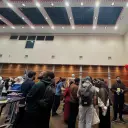
This summer, a lot of them were in our session at MTF, a tech and startup conference in London. It was meant to finish at 11:30. It ran almost an hour over.
We'd built the hard tech session in 2.5 weeks, because that's all the time we had.
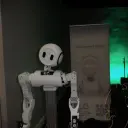
The brief was founders shipping physical products in Britain right now. Real things on the table. No slides. Elo Lite, a humanoid from Elo. A drone with robotic arms from Invictus Robotics. ClearZone's box for phone-free zones. Bench's tooling for small hardware teams.1
Students kept asking sharp questions. Founders kept explaining trade-offs. In the end we had to tell people outright that we'd be downstairs doing demos, and to come and find us there.
They did.
I'd planned to film a few interviews. I only managed one, right at the end. It never went quiet long enough.
One attendee told us afterwards it recharged his motivation.
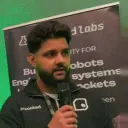
Since then, people have come to Haider from ClearZone wanting to back him, work with him and join him.
Where the graduates go
Now look at where Britain sends its sharpest graduates.
Russell Group university, top three if you can. Computer science. Internships. Then consultancy, banking or big tech. Six figures by your late twenties.
Consultancy shows why the route is narrowing. A first year analyst used to spend weeks building the model and the deck. AI now drafts both in an hour. So firms hire fewer juniors and spend the rest of the year explaining why they need any.
Students at most universities in the country are aiming at the same handful of doors, sold the same six figure promise. What changes is how many people from your course have already walked through one, and whether anyone has told you there are other doors at all.
Those same people could be building Elo Lite.
And not only the engineers. A hardware startup needs people to run operations, win the first customers, manage suppliers and raise the next round. The LSE economist belongs at Elo as much as the Imperial engineer does.
At a startup you carry year five responsibility in year one. Head of operations at 23 isn't on any graduate scheme.
Plenty of the ones who do want to build hardware go to America instead. The brain drain starts long before the visa. It starts with a 22 year old who never met anyone building physical things and took the safe job.
Nobody gets a map
The talent is here. Most of it just never gets near the work.
If you've never met the person building the robot, robotics stays something you read about. If you've never talked to someone shipping hardware, it stays something other people do.
Nobody gets a map. Some people just get closer, earlier.
I know because it happened to me twice.
My first MTF, I couldn't get a ticket. It had sold out, student tickets included. I worked at a charity that partnered with the event, and my manager gave me hers.
I had little exposure to startups. That day I met founders for the first time. I walked out with a different idea of what was possible, and not long after, I joined a startup.
The second time was the Silicon Valley Fellowship. I saved up and paid for the trip myself. Nearly everyone else on the cohort came from Russell Group universities, top universities across Europe and North America, or big tech. I didn't.

What I brought home was pace: how fast small teams move when nobody's waiting for permission.
Both times, nothing about me had changed. Who I was around had.
I want far more people to have that, wherever they study. At every university in this country, someone is building something in their bedroom and assuming the people who could help them are out of reach. They aren't.
Someone gave me a ticket once
This year, we partnered up with MTF to offer discounted student tickets, so more people could get into the building. People from the north. The Midlands. Students from Leicester.
Someone gave me a ticket once. This year we got to hand a few out.
What happens next
More rooms. More founders with real things on tables. More students leaving with a next step instead of a feeling.
One session doesn't build an ecosystem. But proximity compounds. One conversation becomes a follow up. One demo becomes an application. One founder becomes permission to start.
Software got cheap. The next frontier is physical, and it needs more people in the room.


Sources: UK graduate vacancies, July 2026, Personnel Today · KPMG and ISE graduate hiring, People Management
Notes
1 Why these four matter, and why AI can't build them for you, is Part 1: You can't vibe code a humanoid